On Thursday, November 9th, NW Metro Climate Action group had the priveldge of hosting Dr. Lee Frelich, Director at The University of Minnesota Center for Forest Ecology, and Minnesota photographer and artist David Luke. They gave an informative and moving presentation on the future of Minnesota’s beloved BWCA boreal forests in relation to climate change. This topic touches the wild hearts of many Minnesotans. The great firs, birches and spruce forests of the BWCA are deeply embedded into the memories, identity and personal experiences of Minnesotans, holding real value in our lives.
The question that Dr Frelich and David Luke answered is how will climate change impact these forests. While Dr Frelich provided the science, David showed us the vision in pictures of what will become of the BWCA in only a couple short decades.
Minnesota is made of four biomes: coniferous/boreal forest, prairie grasslands, deciduous forest, tallgrass aspen parkland. The boreal forests reach down from Canada and touch the northern part of the state, including the BWCA then stretching down along Lake Superior. The firs, spruce, birch, aspen and pines of the boreal forests thrive in this area due to the cold climate. These trees live in climates with long, severe winters (up to six months with mean temperatures below freezing) and short summers (50 to 100 frost-free days).
Climate change is caused by the dispersment of CO2 levels in the atmosphere. Increased density in our atmosphere cause temperatures to increase. With the continued burning of fossil fuels, C02 levels have reached record levels this year of 410 ppm (parts per million), well above the 350 ppm needed to avoid global warming.
By the end of the century, and even if all UN proposals are met, we are still on track to reach 670 ppm, a rise in temperature of 3.7 degrees C. In Minnesota, this means our summers will be on average 13 degrees warmer. Minnesota’s climate will feel like Kansas, and the BWCA’s climate will be equivalent to Omaha.
Never mind all the health, lifestyle and economic impacts this will bring to Minnesota: What does this mean for Minnesota’s BWCA? It means our boreal forests will begin to disappear, replaced by either grasslands or more likely prairie within a couple of decades. Moose will be replaced with deer and Lynx with Bobcats. Much of the northern wildlife that we identify with Minnesota will be gone, including our state bird the Loon.
Other factors that will accelerate the change over from boreal to prairie forest, will be weather factors caused by climate change such as droughts, wildfire, blowdowns and insect infestation. Similar to the blowdown of 1999 that uprooted and snapped trees in 370,000 of the 1 million wilderness acres. One or two of these blowdowns would be enough to wipe out the tall spruce and firs, leaving the underlying new maples to repopulate the area. Increased temperatures would prevent new boreal forest trees from fighting back.
Also, phenological disturbances such as a 70 degree run of weather in March causes enough stress on the boreal forests to kill them, such as we have had in recent years. Perhaps after one year they would recover, but of a run of several years, which is a certainty in climate change, and they will not have the energy for a comeback. The boreal forest would be forced to surrender their ground to the soft prairies and maples.
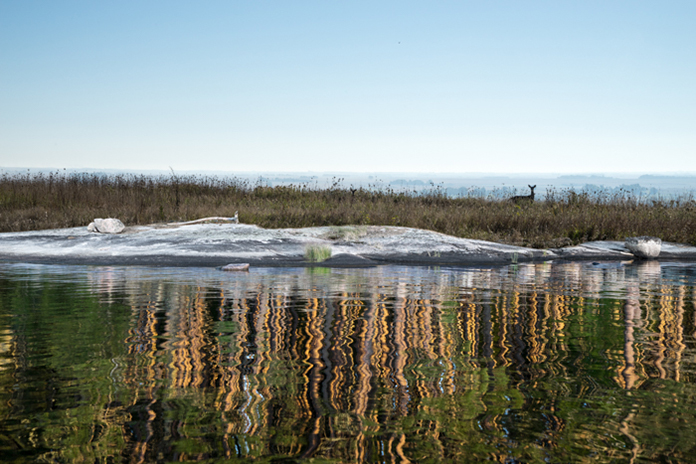
David Luke provided both beautiful and disturbing before and after photographs of our BWCA forests today and what they will look like in future. Large green spruces, replaced by yellow grasses, trees that reach up into the sky, replaced by low lying shrubs and wide maples. Many of the pictures were taken on a lakes edge, and in the after pictures the firs and pines survive in haunting reflections upon the water.
When the lecture was complete, we were left with a deep sadness and need to grieve for our imminent loss.
The BWCA’s untouched, seemingly endless acreage of spruce, firs and pines are worth protecting for most. While climate change is a fact, the damage it prevails is still in our control. We as MN citizens need to know that we have a voice in protecting our environment and that which we love most about our state.
Please make your voice heard. Call or write your congressman, senator or local paper about this issue.
Go to our Action Center page to find your representatives and find other ways to get involved.
To see David Luke’s imagery and learn about upcoming showings, visit his website here.
To read Dr. Frelich’s many papers on climate change and forestry, go to his website here.
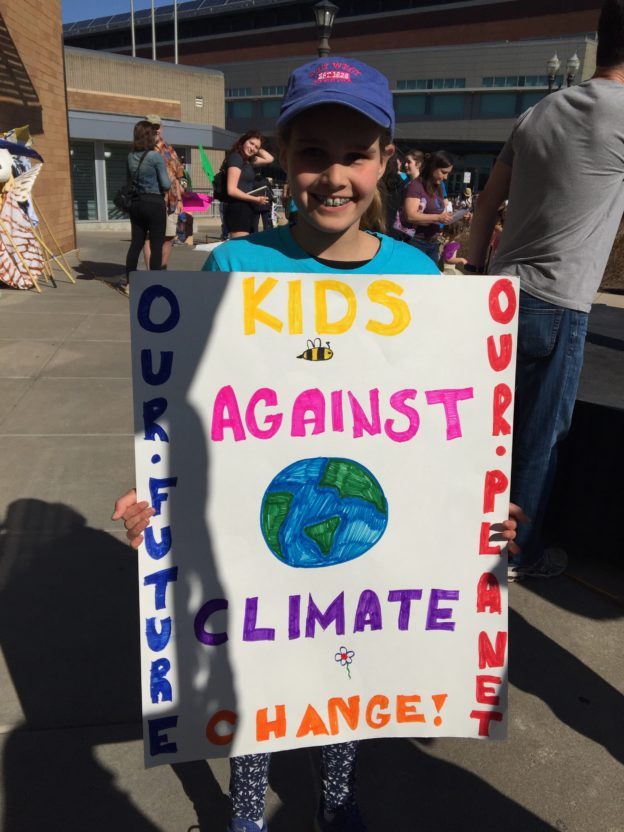
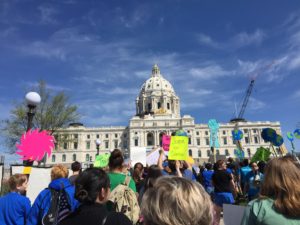
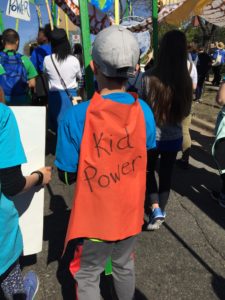 The Kids Climate March started in the brisk morning sunshine in the front of the Science Museum. Kids playfully tried on ferry wings and capes hand painted with messages of love, hope and resistance. Parents huddled around them, taking pictures and joining in their contagious upbeat attitude.